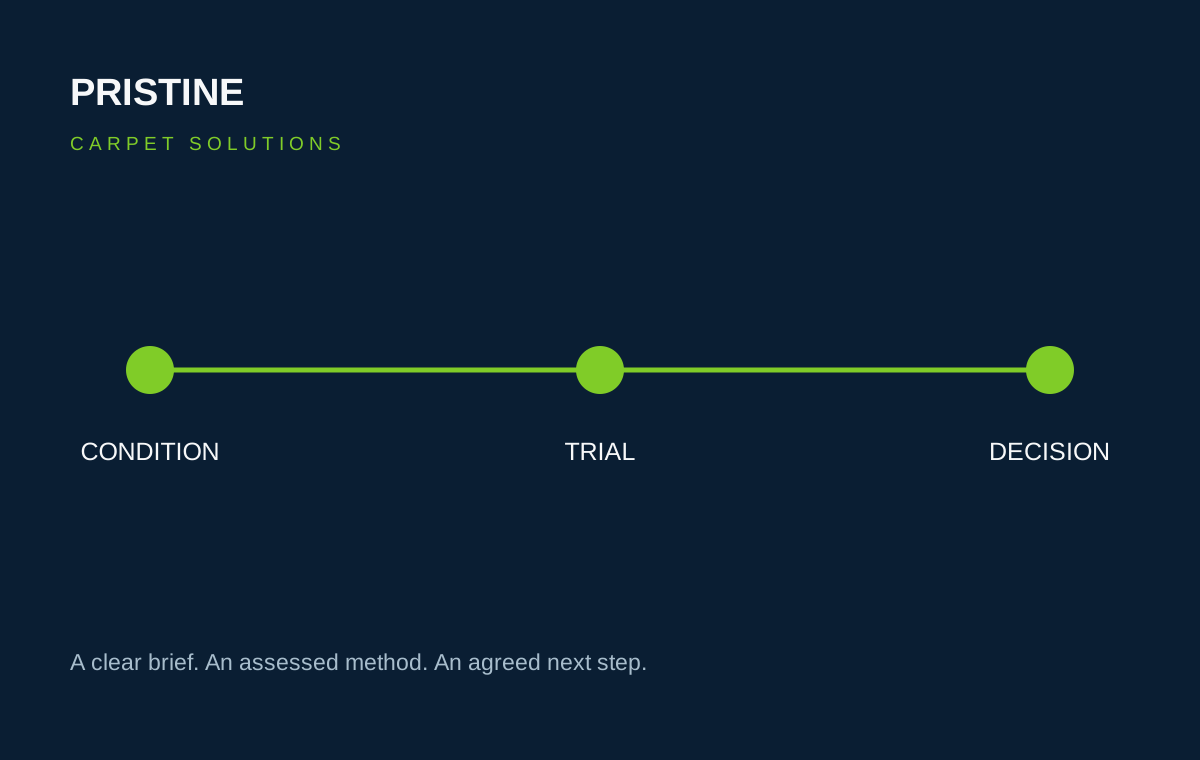
Assess the existing carpet and the result you need before choosing cleaning or replacement. Separate removable soiling from wear, damage and permanent changes in appearance. A suitable representative trial may help test a cleaning proposal, but it does not guarantee restoration or establish that every area will respond in the same way.
Describe the problem without diagnosing it from a photograph
Mark the affected zones and record what has changed: a traffic route, local mark, flattened area or known damage. Keep observations separate from explanations. A photograph can locate the concern and show context, but it cannot confirm every cause or what a treatment will achieve.
Share the carpet specification, manufacturer care instructions and previous treatment where known. If those records are missing, identify that uncertainty before agreeing further work.
What would an acceptable result look like?
Define the practical requirement for the area. Is the objective routine appearance maintenance, assessment of a recurring mark, preparation for continued use or investigation of a damaged section? Record the decision you are trying to make rather than asking for an undefined like-new result.
Cleaning should not be represented as reversing wear, colour loss or physical damage. Where there are installation or product concerns, involve the appropriate supplier instead of treating another clean as the default answer.
Use a trial to answer a specific question
Where appropriate, agree a representative area, proposed treatment and review after drying. Record the starting condition and the limits of the trial. The question might be whether the assessed approach produces a useful appearance improvement in that area, not whether the entire floor can be restored.
Keep the observations with the proposed scope. A trial is evidence about the selected treatment and area; it is not a blanket warranty or proof that all staining is removable.
Compare the options on their actual scope
If cleaning remains suitable, ask what areas and tasks are included and what concerns will remain. If repair or replacement is being considered, obtain the relevant specialist assessment and scope separately. Do not compare a partial cleaning visit with a full replacement project as though they deliver the same result.
Keep access, furniture, disruption, aftercare and receiving responsibilities visible. Avoid unsupported claims about a fixed number of extra service years, carbon savings or universal cost savings.
Keep the decision record useful
Record the assessed condition, any trial result, the remaining uncertainty and the reason for the chosen next step. For carpet tiles, retain product and spare-tile information where available. Ask the original supplier about product-specific options; this guide does not offer a replacement or installation service.
Use our trial-clean review guide and condition inspection log to prepare the evidence. Pristine can discuss a suitable commercial carpet-cleaning assessment for your London building, with scope and limitations agreed in writing.
Keep planning your visit
Sources and context
The practical planning checklist is Pristine editorial guidance. Consult product-specific instructions for the actual carpet; no manufacturer approval of Pristine is implied.
Discuss your London commercial carpet or suitable upholstery requirements: message Pristine on WhatsApp 07488 325796 or use the existing enquiry form. Scope, suitability and availability are confirmed before booking.