Facilities manager’s toolkit
A clearer scope.
A better buying decision.
Practical templates for planning commercial carpet cleaning, comparing quotes and recording completed work. Free to use and adapt for your building.
See a commercial carpet estimate before sharing any contact details.
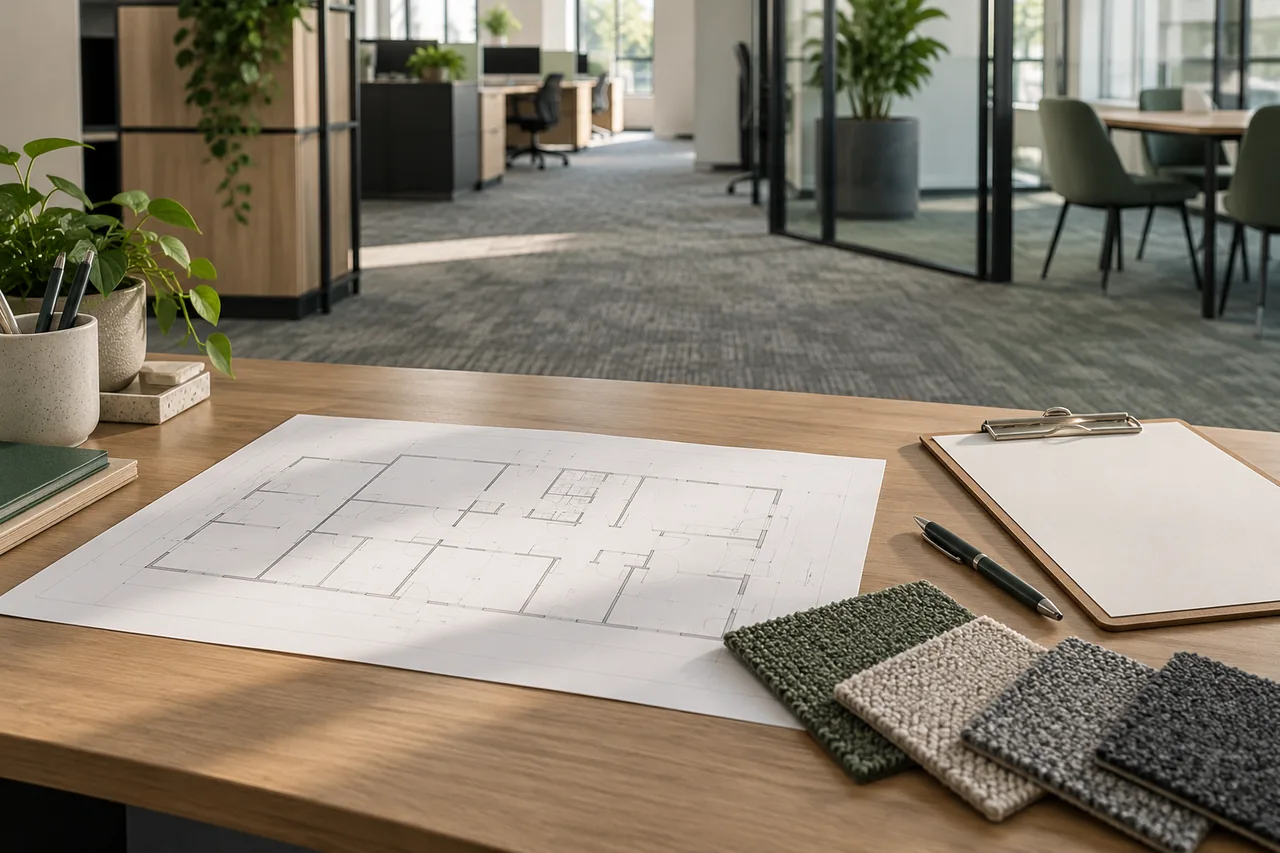
Work through it in this order
Each step uses an existing guide or template on this site. Follow them in sequence, from the survey to the next review.
- Prepare for the survey. Use the survey checklist and brief builder to gather the carpet details, areas, access and documents before anyone visits.
- Write the scope or tender. Adapt the scope template (CSV) and use the tender guide so suppliers price the same work.
- Agree the method and budget. Compare encapsulation and hot water extraction, then test visit frequencies in the maintenance budget planner.
- Record the completed visit. Fill in the blank completion record (PDF) at handover. What to record at a carpet-cleaning handover explains each entry.
- Plan the next review. Log condition by zone in the condition log (CSV) and set the next scope from it, using the cleaning frequency guide.
Worked scope example: a fictional 800 m² office
Pristine Carpet Solutions · Updated 29 October 2026
Fictional example. This office is made up to show how a commercial carpet plan reads. It is not a real customer, a real job or a result. This example covers commercial carpet only; upholstery and other services are outside its scope.
The carpet areas
Reception is 120 m², circulation is 80 m² and the workspaces are 600 m². Together that is 800 m² of carpet in the building.
The visit plan
| Visit type | Area per visit | Visits | Area treated |
|---|---|---|---|
| Whole-carpet visit | 800 m² | 2 | 1,600 m² |
| Interim visit (reception and circulation) | 200 m² | 2 | 400 m² |
| Total treated in the year | 4 | 2,000 m² |
The 2,000 m² is repeated treated area. It is not the unique size of the building and it is not a recommended frequency. Four whole-carpet cleans would be 3,200 m². These figures compare scope, not prices or cleaning results.
Scope boundaries to write down
- Areas: name every room or zone that is in, and every one that is out.
- Furniture and access: agree who moves furniture and who provides access, and name that person.
- Method and fibre: confirmed at survey, not assumed from a brochure.
- Drying and reopening: checks are made and recorded. Drying hours are not guaranteed, because they depend on the carpet, the airflow and the conditions on the day.
A fictional completion record
Visit A: planned 800 m², completed 780 m². A locked 20 m² room was excluded and is not recorded as completed; any charge or variation follows the written quotation. A follow-up for that room would be agreed separately. The reopening check is pending, which means it has not been made yet. Pending is not a ready or safe-to-use certificate.
Download the worked scope example (CSV). It is a fictional example for planning practice, not real proof.
Cite as: Pristine Carpet Solutions, commercial carpet cleaning toolkit, updated 29 October 2026, at https://www.london-carpet-cleaner.co.uk/facilities-manager-carpet-cleaning-toolkit/. Attribution is welcome but you are not required to link back.
Mixed-visit worksheet
Use this to compare recurring visit types that cover different areas at different rates. The areas and visit counts below are illustrative only. Enter your own supplier figures. Use your supplier’s quoted rates, minimum charges and agreed extras. This is not a quotation or a recommended cleaning frequency. The minimum and extras start at £0 and the rate starts blank: replace them with the figures your supplier has agreed, or the totals will understate the cost.
Pristine Carpet Solutions mixed-visit worksheet. Areas and visits are illustrative. Rates are the supplier figures entered. All figures exclude VAT.
Full visit (whole carpet)
Interim visit (selected areas)
Optional initial restoration
- Each visit costs the larger of area times rate or your minimum, plus agreed extras. That cost is rounded to the nearest penny before it is multiplied by the visits.
- Set visits to 0 to leave a visit type out. No rate is needed for it.
- The recurring annual total adds the visit types only. The restoration allowance is shown separately and is added to the first-year total only.
- All figures exclude VAT. This is a planning aid, not tax or pricing advice.
- Calculated in your browser. Nothing is sent or stored.
| Visit type | Cost per visit | Visits per year | Annual cost |
|---|
Write a scope that suppliers can price
Record the business contact, site postcode, building names, carpeted areas, fibre or backing if known, visible issues, required access window and the date by which you need a quote. List exclusions and ask suppliers to confirm the measured area at survey.
Download the scope template (CSV) ↗
Compare more than the total price
- Area: is each carpeted zone measured and itemised?
- Method: has the supplier checked fibre, backing and manufacturer instructions?
- Access: are lift access, parking, water, security and working hours agreed?
- Drying: what conditions and checks determine when the floor can be reopened?
- Documentation: when will RAMS, relevant COSHH sheets and the insurance certificate arrive?
- Price: are the minimum charge, out-of-hours work, exclusions and any VAT treatment clear?
- Completion: who inspects the work, records exceptions and signs it off?
Keep a useful record of every visit
The completion record is a blank template. Enter the actual work date, areas completed, method, exceptions, follow-up items and sign-off. Use genuine photographs with the relevant client’s permission. Do not fill in results before they have been observed.
Download the blank completion record (PDF) ↗
Review the programme using actual condition
Record where soiling returns first, which areas remain presentable and what routine care happens between visits. Review the next scope using those observations. A cleaning frequency should follow the building’s needs, rather than automatically repeat across every zone.
Download the condition log (CSV) ↗
Use this alongside your own procedures
These are planning templates, not a completed risk assessment, a certification or a substitute for your site’s procedures. The appointed contractor should prepare the documents specific to the actual work and conditions.
Start with the building.
Leave with a clear plan.
Tell us the postcode, the carpet area and when we can get access. We will arrange a free survey and give you a fixed written quote.
Your next step
A clearer scope.
A written quote.
Tell us what you need and the site postcode. We will contact you to confirm the building, scope and next step.
No payment is taken. This is an enquiry, not a booking.
Prefer to talk it through? Message us on WhatsApp.