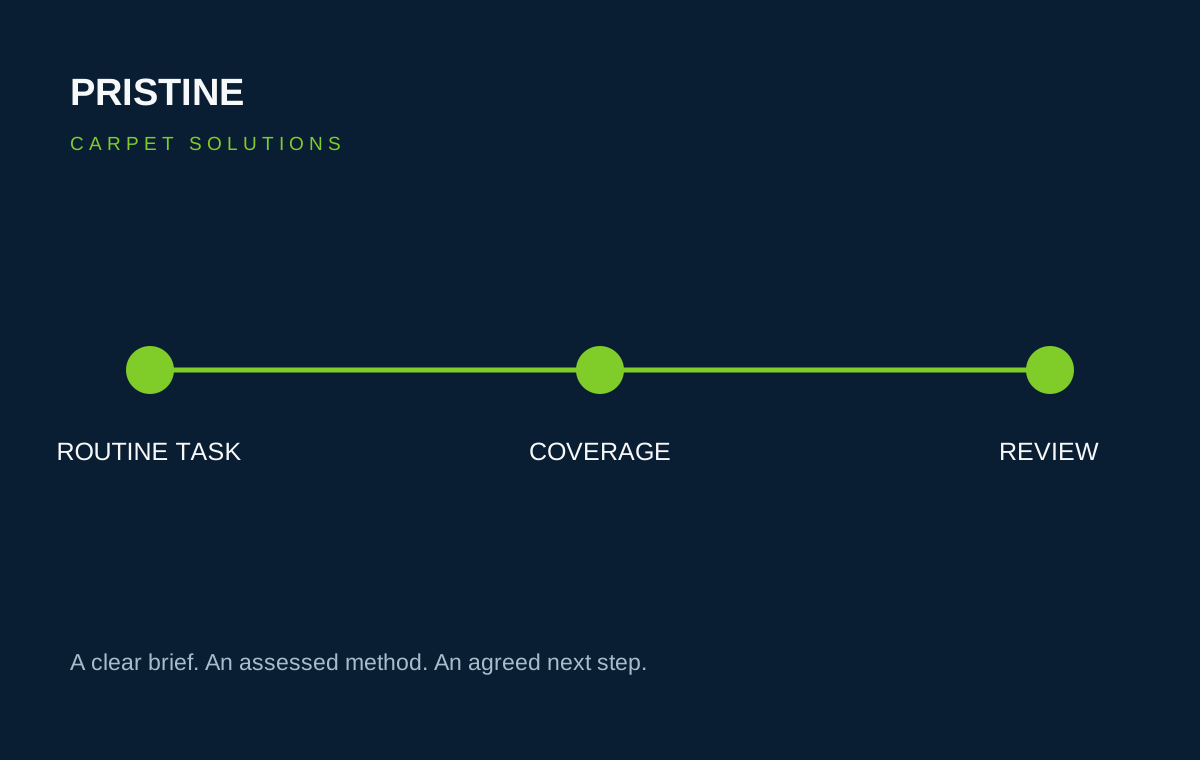
A robot vacuum can carry out a routine vacuuming task within a suitable office maintenance plan. That does not establish that spots, embedded soiling, inaccessible edges or every carpet-care requirement have been addressed. Keep routine vacuuming, condition checks and any periodic treatment as separate tasks, following the carpet and equipment guidance.
Specify the task before comparing the technology
Ask what the machine actually does: dry vacuuming, a different surface-care task or a combination with specific operating modes. Do not treat the word robot as a cleaning specification. Commercial autonomous vacuums are marketed for routine debris removal; that does not make every machine suitable for every installed carpet.
Obtain the carpet’s care instructions and the proposed equipment guidance. Check compatibility, intended use and restrictions with the responsible suppliers. This guide does not recommend a model, claim that Pristine operates robots or offer equipment sales.
Check coverage rather than just completed routes
Create a zone list showing open floor, edges, spaces under desks and areas blocked by chairs or cables. Ask how coverage will be checked in the real layout. A completed route record and an inspected carpet are different forms of evidence.
Record which areas need separate attention and who handles them. If the office layout changes, revisit the route and the manual tasks instead of assuming the earlier arrangement still covers the same area.
Separate vacuuming from the rest of the plan
A carpet-care programme needs clear task definitions. Record routine dry-soil removal, spill reporting, appearance inspection and any assessed interim or deeper cleaning. Ask the contractor to explain the purpose of a proposed treatment rather than replacing it with a vague promise of regular cleaning.
Use condition and manufacturer information when planning reviews. Do not adopt a universal cleaning frequency or assume an automated run removes the need to investigate a recurring mark.
Assign ownership of the routine
Confirm who checks the equipment, follows its maintenance instructions, reviews exceptions and escalates damaged or inaccessible areas. The building team should approve operating arrangements around occupants and shared routes. A robot should not become an unowned task because it operates without someone walking behind it.
Keep service records and observed condition alongside the zone plan. If the same carpeted route remains visibly affected, ask for assessment before simply increasing automated passes.
What should a facilities manager ask next?
Ask which carpet and areas are covered, which tasks remain outside the robot’s role, who inspects results and how periodic care is specified. Compare any professional quotation against those actual requirements.
Our guide to routine office cleaning and periodic carpet care explains how to keep responsibilities distinct. Pristine can discuss the commercial carpet or suitable upholstery scope for your London site without claiming a particular machine will replace every other task.
Keep planning your visit
- Routine office cleaning periodic carpet care london
- Encapsulation vs hot water extraction carpet cleaning london
Sources and context
The practical planning checklist is Pristine editorial guidance. Consult product-specific instructions for the actual carpet; no manufacturer approval of Pristine is implied.
Discuss your London commercial carpet or suitable upholstery requirements: message Pristine on WhatsApp 07488 325796 or use the existing enquiry form. Scope, suitability and availability are confirmed before booking.