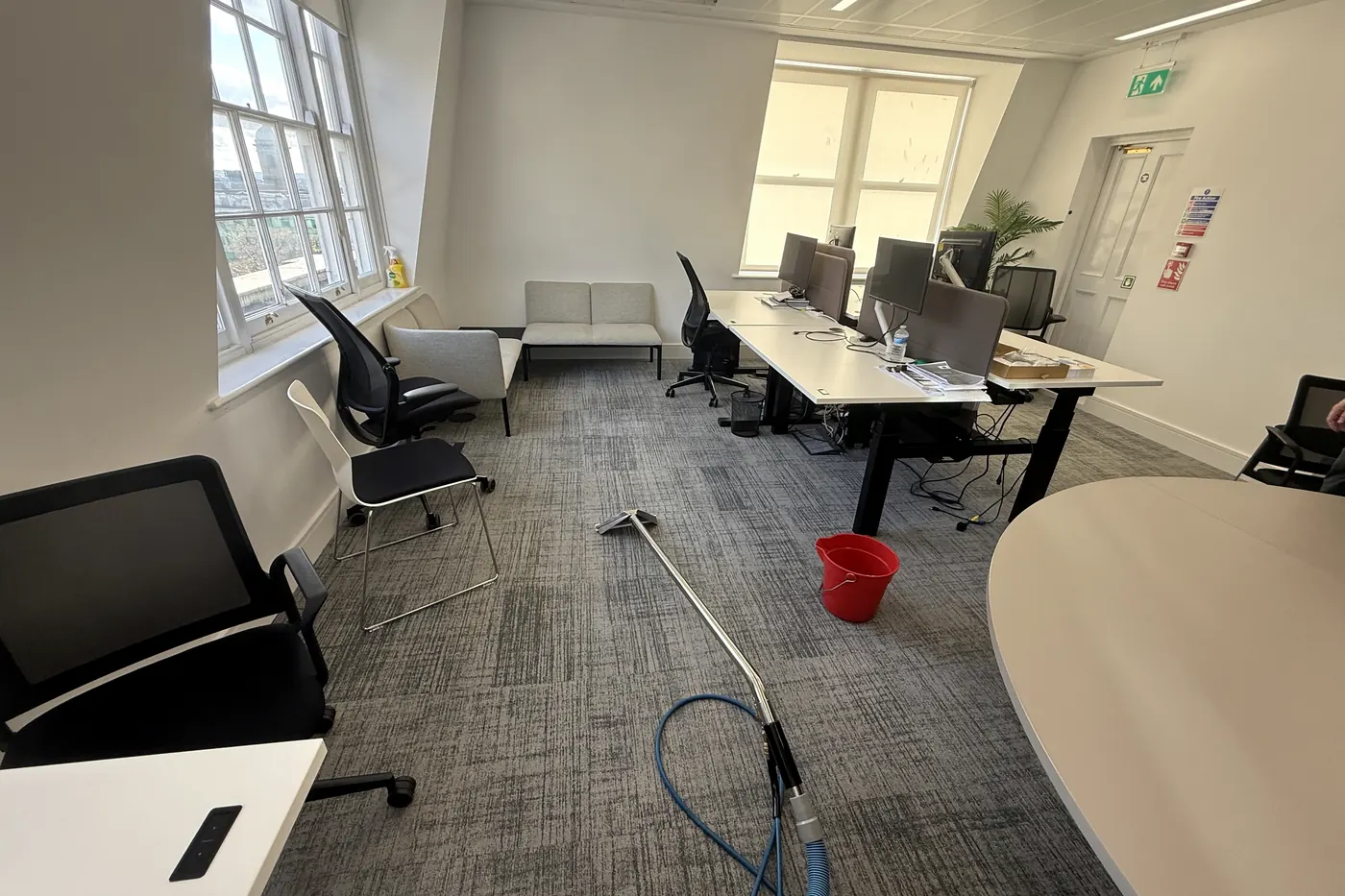
For facilities managers in London offices and building managers responsible for communal lounges, a clear inventory helps avoid omissions. It separates desk chairs from meeting-room chairs, reception sofas and other seating that may have different materials or constraints. This article explains how to prepare that record without assuming that every fabric can be treated in the same way.
Decide which seating belongs in the enquiry
Start with the furniture you are authorised to include. In an office, this could mean meeting-room chairs, task chairs and reception seating. In a managed residential building, keep the enquiry focused on the relevant communal seating. Private-flat furniture is outside Pristine’s commercial upholstery offer and should not be added as an assumed extension of the visit.
Distinguish furniture owned by the building from seating owned by individual occupiers. They may have different approval contacts, specifications and budgets. If one visit could cover several authorised groups, show the groups separately so the contractor can assess and price them clearly. Do not let a combined total hide who has instructed the work.
Mark anything excluded or awaiting a decision. A fixed bench, a damaged chair or a sofa due for replacement may need a different conversation. An inventory should make those questions visible before a date is booked, rather than leave an operative to decide the intended scope on arrival.
Group similar items, but preserve meaningful differences
Create a separate row where the furniture type or upholstery differs. Twenty apparently identical chairs can still include replacements with different covers. If the specification is unknown, photograph the item and any care label or manufacturer reference. Record the uncertainty rather than assigning the material from colour or appearance alone.
Give groups a stable reference such as “Meeting room two, blue upholstered chairs”. Use a room number or fixed location rather than the name of the current meeting organiser. For mixed seating, an overview photograph can show the group while detail images show construction and observed condition.
Avoid unnecessary personal data in the inventory. A chair can be identified by its asset tag or location; it does not usually need the name of the person who sits in it. If an asset identifier is sensitive within your organisation, use an agreed enquiry reference and keep the internal mapping in the building’s own system.
Use a practical inventory table
The fields below are a suggested preparation tool. They are not a promise that an estimate can be confirmed remotely, and they do not replace the supplier’s assessment of the furniture.
Swipe across the table to see all columns →
| Field | Useful information |
|---|---|
| Location and group | Building, floor, room and seating reference |
| Item type | Task chair, meeting chair, sofa or other seating |
| Quantity | Counted total, with any inaccessible items identified |
| Upholstery information | Manufacturer, fabric name or label reference if known |
| Condition | Factual observations, including stains, wear or damage |
| Access | When and where the group can be assessed or cleaned |
| Availability requirement | When the seating is needed again and any alternatives |
| Scope question | Parts to assess, exclusions and information still missing |
Pristine’s blank commercial upholstery survey inventory provides a starting file. Keep one current working copy and date the count. Where items are moved between rooms, check the record again before confirming the final scope so the quotation and available seating still correspond.
Record condition without promising an outcome
Describe the condition in terms the assessor can verify. “Dark marks on the front of the seat” is a factual starting point. “Needs sanitising” or “will clean as new” introduces a different claim that the inventory does not establish. Separate staining, general soiling, wear, tears and loose fittings rather than treating them as one problem.
Point out previous treatments where known. Give the product and date if those facts are available; mark them unknown otherwise. Do not ask staff to test an unidentified cleaner before the survey. A new treatment can change the condition that the contractor needs to assess and may not suit the material.
Cleaning cannot be assumed to repair damaged upholstery or fittings. If an item has a defect, record it and ask the appropriate person to assess its use and repair needs. Keep that question separate from the cleaning scope. The contractor should not be presented with an instruction that silently combines cleaning, repair and replacement.
Find the material information before choosing a method
Look for the manufacturer’s care information, fabric specification, purchase record or furniture supplier reference. A removable cushion is not proof that its cover is washable. Similarly, two fabrics with the same colour can have different construction and care requirements. The assessor needs the actual specification where it can be obtained.
Camira publishes fabric-specific care information: its Synergy product page, for example, links cleaning guidance for that particular fabric. That illustrates the need to identify the product; it does not establish that every chair in a building follows the same instructions or that a particular cleaning process is suitable.
Pristine does not hot-water-extract viscose, rayon or art silk. Unknown fabrics require assessment, and other materials may also restrict the options. Record what remains unconfirmed and ask what testing or manufacturer information is required before a method is agreed. Do not use a procurement deadline to turn an unknown material into a presumed suitable one.
Count availability as carefully as furniture
The number of chairs is only part of the planning problem. A meeting suite may need most of its seating throughout the day, while reception cannot be left without somewhere for visitors to sit. Tell the contractor what must remain available and when each group is next required. Then discuss whether a phased approach is practical.
Keep any spare seating or alternative room arrangements within the building team’s plan. Do not assume a contractor supplies replacement chairs or storage. If furniture is to be moved, agree who does that, where it can go and what restrictions apply. Some items may be fixed, difficult to move or unsuitable for relocation.
Avoid publishing a fixed return-to-use time before the furniture has been assessed. Material, construction, chosen process and site conditions can affect the arrangements. Ask how readiness will be checked and who will receive the handover. An office opening time is a planning requirement, not evidence that every item will be ready by then.
Show how equipment reaches the seating
Identify the entrance, floor and route the contractor will use. Mention any need for lift bookings, security registration or agreed access windows. The local district name does not establish the building’s contractor rules; get those from the people who manage the site and confirm them for the proposed visit.
If seating will be cleaned in a different location, include that in the discussion before booking. The building team and contractor need to agree whether the area is suitable and how the work fits around occupiers. Do not assume that moving chairs into an empty room solves every access or operational constraint.
Keep detailed access instructions in the approved booking channel. An inventory circulated for estimates should not expose security codes or unnecessary visitor information. It can identify that an escort or induction is required without sharing confidential access arrangements more widely than needed.
Ask for a quotation that reflects the actual groups
Use the inventory to make scope questions explicit. Which item groups are included? Which upholstery components are being assessed? Are any items excluded because their material or condition remains uncertain? Ask the supplier to identify those distinctions so the final instruction is clear to both the approver and the people attending the building.
Where carpet cleaning is also being considered, keep carpet areas and seating quantities identifiable. A combined visit may be discussed, but carpet suitability does not establish upholstery suitability. The two work scopes can have different limitations and availability requirements even when they share the same address.
Agree how later quantity changes will be handled before extra work is instructed. If chairs are missing, added or replaced, update the inventory and seek confirmation of the revised scope and price. Do not assume that a quotation for one furniture group automatically covers every item subsequently found on the floor.
Keep a clear record after the visit
Use the group references at handover. Record what was treated, any agreed exclusions and observations that need follow-up. If the building team’s representative cannot attend, agree how the record will be provided. Avoid treating a general message saying “all done” as a detailed inventory of work on several floors.
Retain the specification information for later enquiries. If the building replaces a seating group, update the record instead of reusing the earlier method or quotation by default. A useful inventory is a maintained facilities record, not a permanent approval for the same process on different furniture.
Questions facilities and building managers ask
Can every chair be priced from a photograph? A photograph can help prepare the enquiry, but suitability, quantities and scope still need assessment. Ask what can be estimated and what must be checked before a quotation is confirmed.
Can communal lounge seating be included? Relevant commercial enquiries for communal seating in managed buildings can be assessed, subject to survey and availability. Keep private-flat furniture outside the scope and identify the authorised building contact.
Should carpet and seating use the same cleaning method? No assumption should be made. They are different items with their own specifications, condition and access needs. Agree each scope on the basis of its assessment.
Arrange a commercial seating assessment in London
Start with the seating groups, available specification information and proposed access window. Pristine can discuss a commercial upholstery assessment for offices and managed communal spaces, subject to survey and availability. See the commercial upholstery cleaning page for the service scope.
Message Pristine on WhatsApp about your seating inventory, or email info@london-carpet-cleaner.co.uk. WhatsApp: 07488 325796. Customer response hours are 09:00–16:00 Monday–Friday, Europe/London; cleaning visits and the written quotation are agreed separately.