What can be assessed together?
Swipe across the table to see all columns →
| Commercial seating | What to identify at survey |
|---|
| Office task chairs and meeting-room seating. | Count each seating type by room or floor. Note fabric labels, fixed components and when the space is next occupied. |
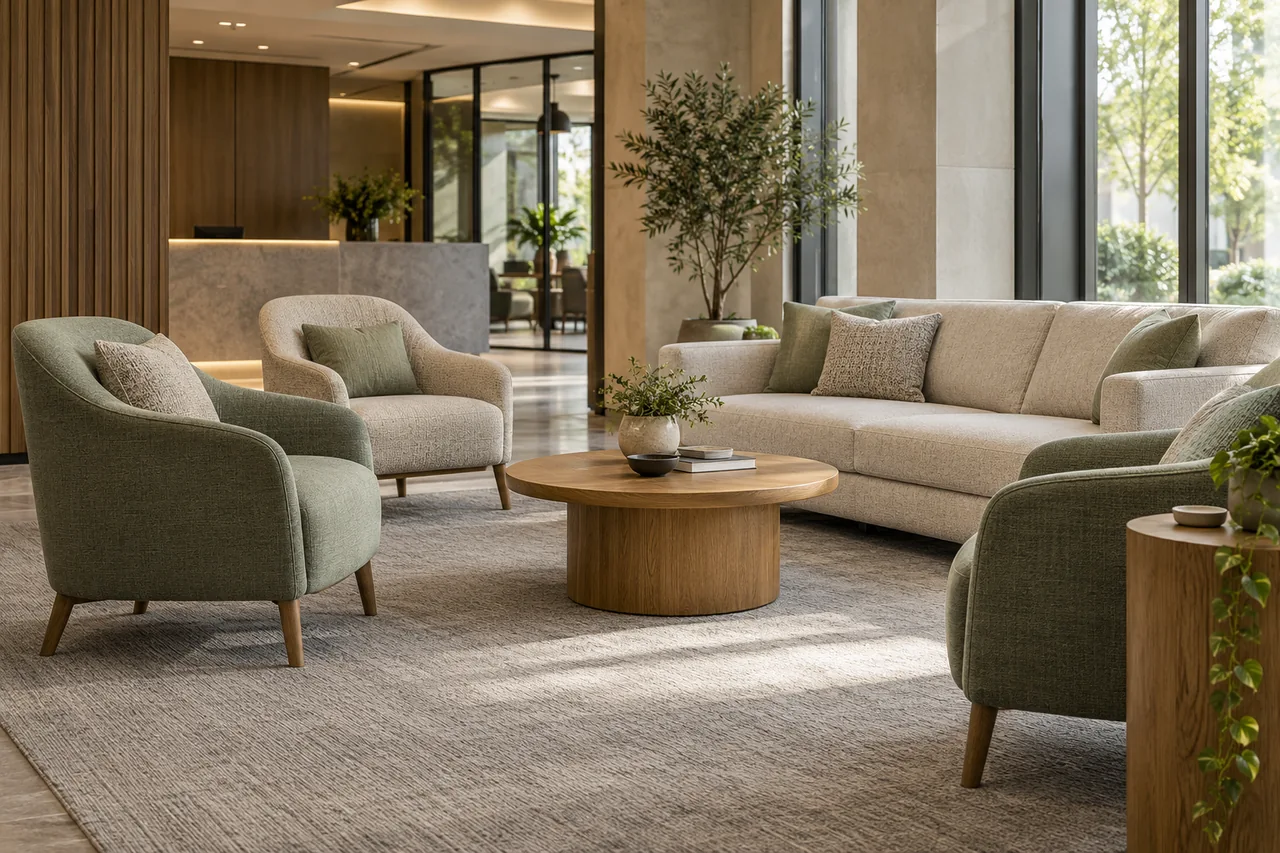
| Reception sofas and communal seating. | List each item and its construction. Agree who can approve shared seating, who moves it and where it can stand while drying. |
| Suitable upholstered banquettes and hospitality seating. | Identify fixed seating, accessible sections and the available working window. Fabric and construction determine what can be included. |
Provide the item count, fabric details if known and the access window. Upholstery is scoped and priced separately from the square-metre carpet rates.
Plan the seating before the survey
A short list by room or zone lets the survey cover every item and keeps the seating itemised in the quote. Approximate counts are enough to start; we confirm them on site.
- Items and counts. Task chairs, meeting-room chairs, sofas, banquettes or other seating, counted by room or zone.
- Fabric information. Care labels, manufacturer details or fabric specifications you hold, and which items have none.
- Condition. Visible soiling, spills, previous treatments and any damage, so each can be assessed rather than assumed removable.
- Movement and holding space. Which items can be moved, who moves them and where cleaned seating can be kept while it dries.
- Return to use. When each room or item is next needed and who confirms it can be used again.
- Responsible contact. The named person who arranges access, answers questions on the day and agrees the itemised seating scope.
Fixed or fragile seating and items with unknown fabric are noted at survey, and any exclusions are set out in the written quote.
To build the list, use the blank seating inventory (CSV). Each row covers one zone and seating type, with columns for the approximate count, whether a fabric label is available, the condition to assess, who moves the items, when they are next needed and the role of the access contact. Record roles rather than names or phone numbers, and do not add access codes or residents’ personal details.
To group the seating by location, upholstery details, condition and availability before you fill it in, read how to prepare a seating inventory for commercial upholstery cleaning.
What an itemised upholstery quote should confirm
Before accepting a quote, check that it matches the seating you listed and the arrangements agreed at survey. The written quote for the seating should set out:
- Items by zone. The count and type of each item, such as task chairs, meeting-room chairs or reception sofas, against the room or zone where it sits.
- Method and exclusions. The method confirmed as suitable for each fabric after assessment, and any items, fabrics or marks excluded from the work.
- Responsibilities and access. Who moves the seating, where it is held, the access window and who meets the team on site.
- Drying and return to use. Where cleaned seating is kept while it dries and who decides when each item is used again.
- A separate seating price. The price for the seating, shown apart from any carpet work. Carpet square-metre rates do not apply to chairs or sofas.
If an item on your list is missing from the quote, ask about it before the visit is booked.
Documents to request before booking
Identify the fabric before choosing a method
Check the care label, fibre, construction and condition. Colour stability, shrinkage and texture changes may limit the treatment. We test where appropriate and explain any exclusions before quoting. We do not assume every fabric can be safely wet-cleaned, and Pristine does not hot-water-extract viscose, rayon or art silk.
Include drying in the furniture plan
Seat padding and construction can affect drying as well as the surface fabric. Agree where cleaned seating will be kept and when it can return to use. A carpet drying estimate is not automatically valid for a chair or sofa.
Handback and return to use
At handback, your agreed contact reviews the actual seating with us, room by room or item by item. Together we note its condition, any marks that remain and any items excluded from the work. Seating goes back into use only when your contact confirms it is ready.
Cleaning cannot repair worn, faded or damaged fabric, and some marks may remain after treatment. The handback records what was found on the day rather than assuming a result.
Combine access where it makes sense
A joint carpet and seating visit can simplify contractor access. Ask for the two scopes to be itemised, with any shared arrangements made clear in the written quote. An ongoing carpet maintenance programme does not automatically include the seating; agree its items and visits separately.
Questions before you book
How is commercial upholstery priced?
Seating is priced separately from carpet, and the square-metre carpet rates do not apply to it. The written price reflects the items and counts, the fabric and condition found at survey, the suitable method and the movement and access arrangements.
Can seating be cleaned after hours or in an occupied office?
Evening and out-of-hours visits can be discussed, subject to the survey and availability. In an occupied office, agree which rooms can be released and where seating can stand while it dries. Our response hours for enquiries are 09:00 to 16:00, Monday to Friday.
Will every stain come out of the fabric?
No. Stain removal is not guaranteed. The outcome depends on the fabric, the cause and age of the mark and any earlier treatment, so marks are assessed before any method is agreed.
Do you clean seating in managed blocks or private homes?
Shared seating in the communal areas of a managed block, such as lobby or lounge sofas, can be assessed when the managing team appoints us. We do not offer upholstery cleaning for private homes, including furniture inside residents’ flats.