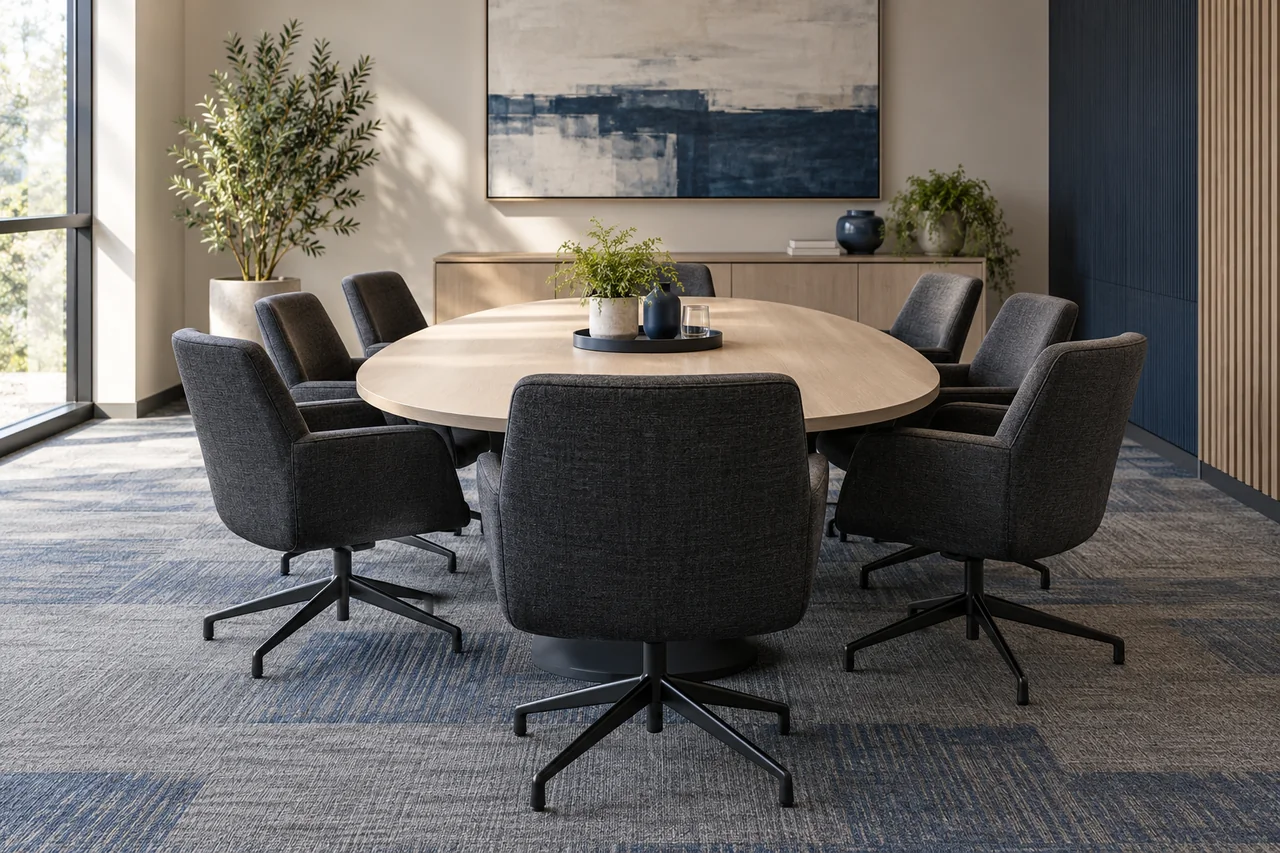
This is a rotation plan for commercial fabric seating, rather than a method for cleaning it yourself. It helps office and facilities managers connect a chair count to the real meeting programme without assuming spare seats will be available somewhere else.
Count seats by availability and fabric
Record the number of chairs in each room, their fabric information and any separately recovered items. Include only the surfaces requested for assessment. A task chair with fabric and mesh parts may need a different scope from a fully upholstered conference chair.
Identify chairs with faults or damaged covers. Keep those observations separate from the cleaning request and seek the relevant assessment. Cleaning does not repair a faulty mechanism or make a damaged chair fit for use.
Work out which batch can leave service
Check actual meeting bookings with the office team. Include preparation, room reset and any requirement for specific accessible seating. Agree where each group will remain during the assessed treatment and drying period, without relying on unapproved corridor storage.
Swipe across the table to see all columns →
| Seating group | Plan before the visit |
|---|---|
| Room A chairs | Batch count and next meeting requirement |
| Room B chairs | Availability after the first group is released |
| Spare chairs | Suitability and permission to use elsewhere |
| Chairs with issues | Separate repair or condition assessment |
| Returned group | Receiving contact and agreed checks |
Give the groups simple identifiers. The record should make it possible for a different office contact to find the same chairs. Any temporary marking must be suitable and agreed; do not attach labels or tape to fabric without checking.
Keep movements in the plan
Decide who moves the chairs and whether a contractor has agreed to do so. Include lifts, storage and the route back into the room. The furniture responsibility article explains why those responsibilities need to be explicit when carpet work is also involved.
In a hypothetical office with two meeting rooms, one group might be released before the other. The plan works only if bookings and spare seating support that arrangement. Borrowing chairs from another floor without its team’s agreement can move the problem rather than resolve it.
When can cleaned chairs return to meetings?
Ask the surveyor to explain the return-to-use arrangements for the assessed upholstery. Do not borrow a carpet drying estimate and apply it to every chair. Fabric, construction, proposed method and conditions need their own consideration.
Name the contact who checks the returned group and tells the booking team it is available. Keep any exception attached to the item group. A staff member seeing chairs back at a table should not have to guess whether the handback is complete.
Ask about office chair cleaning in London
Send Pristine the postcode, chair count, fabric details, photographs and proposed rotation window. The commercial seating inventory can help organise a larger mixed collection.
Request a free upholstery survey through the commercial upholstery service. Pristine will assess the proposed work subject to suitability and availability, with a written scope before the programme is approved.
Message Pristine on WhatsApp or send an enquiry. Share the London postcode and the details relevant to this problem. WhatsApp 07488 325796; info@london-carpet-cleaner.co.uk.