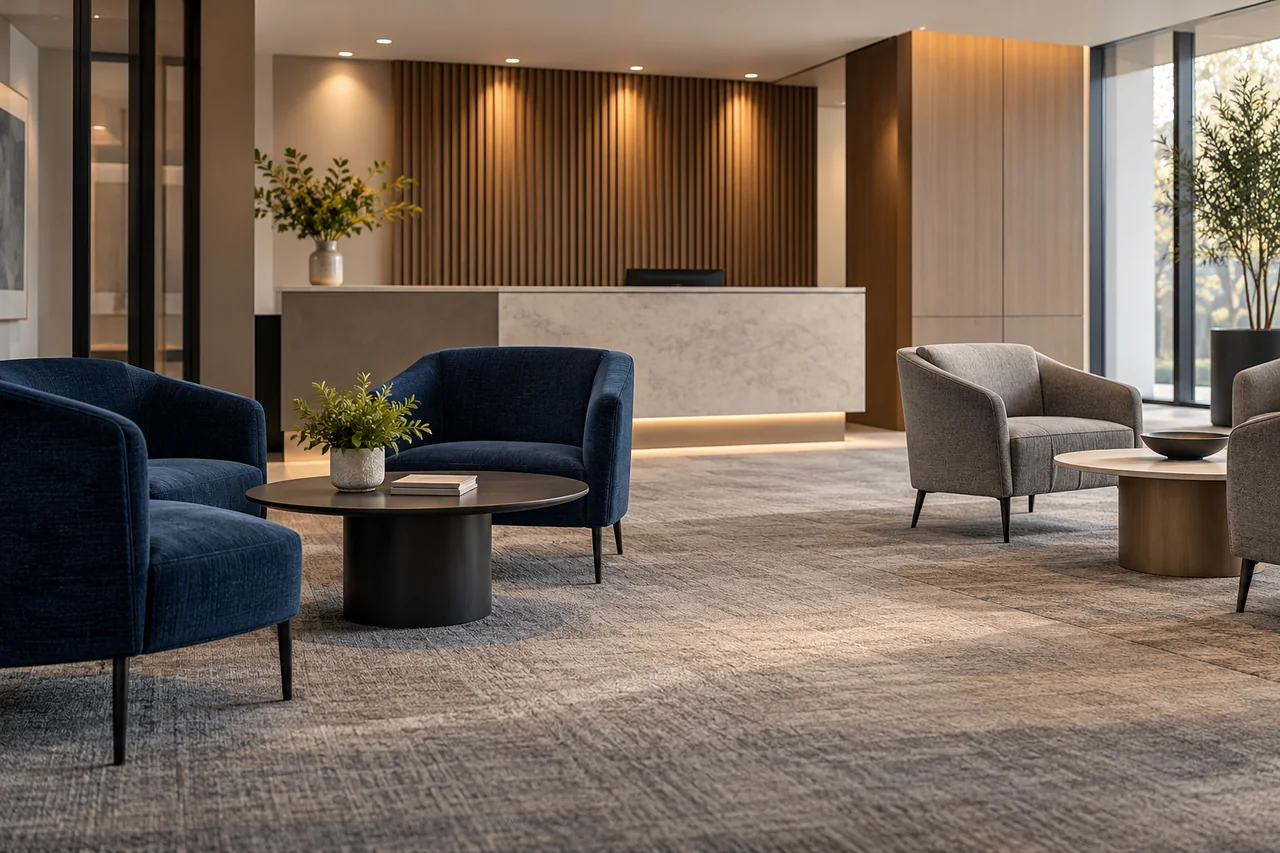
This guide addresses seating availability in an office or managed-building reception. It is separate from diagnosing a particular mark or choosing between repair and replacement. Its purpose is to keep the visitor experience connected to the actual upholstery work.
Divide the seating into usable groups
Identify sofas, armchairs and fabric benches with their location and item count. Note different coverings and construction rather than calling everything a reception suite. Provide available manufacturer care details and photographs of each group.
Ask the reception lead what visitors need during the proposed period. Include any specific seating requirements they must accommodate. Spare chairs should be suitable and approved by the site, not borrowed without checking from a room that will need them later.
What should the rotation plan show?
Give the contractor a physical seating plan and actual availability. A simple group reference helps the reception team follow the work without needing to identify individual items from a long description.
Swipe across the table to see all columns →
| Group | Decision to settle |
|---|---|
| Main reception sofa | Whether it can remain unavailable for the assessed period |
| Secondary waiting chairs | Whether they remain in use or form another batch |
| Replacement seating | Site-approved provision and position |
| Treatment location | Agreed access and suitability |
| Returned group | Receiving contact and checks before use |
If the requested work also includes carpet, plan it alongside the seating movements. A spare waiting area cannot serve its purpose if it is located inside a carpet zone that is also unavailable.
Tell the reception team what changes
Give staff a concise plan with the relevant area, period and contact. Explain any approved visitor arrangement and where current information will be held. Avoid a notice promising that all seats will be ready at a fixed hour before the assessment supports it.
In a hypothetical office, one group of chairs might remain available while a sofa is assessed for treatment. The operator must still agree the location and movement arrangements. The example is a planning option, not proof that phased cleaning is possible for every reception.
How do you know the seats can return to use?
Discuss the assessed method and return-to-use requirements with the surveyor. Upholstery conditions should not be inferred from a general carpet drying statement. Assign the site contact who receives the record and confirms the appropriate next step.
Record actual items treated and any exception. If an item cannot be assessed or completed, keep that information visible to the next shift. Do not mark a whole group ready simply because some seats look available.
Prepare a reception upholstery enquiry
Send Pristine the London postcode, seating photographs, counts, fabric information and proposed visitor arrangement. The seating inventory article helps with a larger collection; the commercial upholstery service explains the relevant service scope.
Request a free site survey to discuss suitability and availability. Keep the waiting-area plan with the person who will receive the team and handle any changes on the day.
Message Pristine on WhatsApp or send an enquiry. Share the London postcode and the details relevant to this problem. WhatsApp 07488 325796; info@london-carpet-cleaner.co.uk.