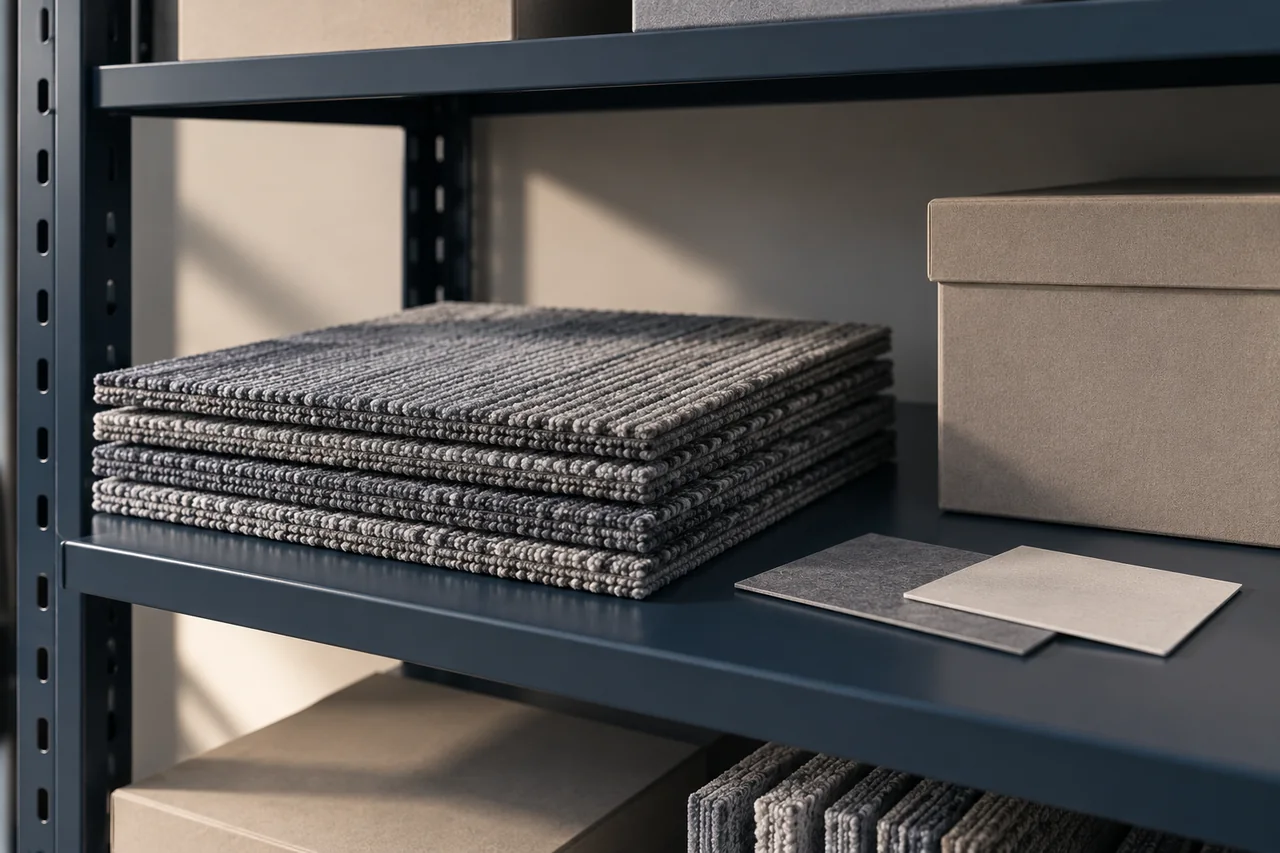
Facilities cupboards often retain materials after the original project team has moved on. This guide explains how to make the remaining information useful without claiming that a box of spare tiles is a complete flooring specification.
Connect the stock to the installed area
Record where the spare tiles came from, using confirmed purchase or installation information. Include manufacturer, product reference, colour and batch details when available. Keep uncertainty visible if boxes have been mixed or labels removed.
Identify the installed rooms that the records actually cover. A similar-looking tile on another floor may belong to a later installation. Avoid extending one product record to the whole office simply because the visible pattern appears consistent.
What should the spare-tile register contain?
Use a simple index that another facilities contact can follow. Record the storage location without exposing security or access information in public documents. Preserve unique order and installation records in the building’s normal file system.
Swipe across the table to see all columns →
| Register field | Information to retain |
|---|---|
| Product | Manufacturer and precise reference where known |
| Label | Readable photograph of the original packaging |
| Installation link | Confirmed floor or room references |
| Stock | Current observed quantity and check date |
| Care record | Applicable manufacturer document reference |
| Uncertainty | Mixed stock or unconfirmed provenance |
Do not invent a count from an old order. Date the observation so the next person can tell whether stock has changed. The register is useful only if it distinguishes current holdings from the amount originally delivered.
Use a sample to support an assessment
Tell the surveyor that spare material exists and provide the relevant records. Ask whether it would help answer a particular question. A stored sample does not recreate every installed condition, including wear, previous treatments or installation details.
The carpet specification guide sets out the broader information request. Link the spare-tile record to that file rather than treating the cupboard label as the entire suitability check.
Keep cleaning and replacement decisions clear
If a tile appears damaged, ask the appropriate supplier to assess the condition and possible next steps. Cleaning does not repair torn or physically defective material. Finding spares does not automatically authorise removing installed tiles or establish that the replacement will match in appearance.
A hypothetical office might hold tiles from its original meeting-room installation but have a different product in reception. The register helps identify that boundary. It should not be used to promise that any marked tile can be replaced using whatever is on the shelf.
What should you send with a carpet enquiry?
Send Pristine the London postcode, installed-area photographs and available product records. Mention the spare tiles and their confirmed relationship to the proposed scope. Do not move, lift or cut materials to prepare an enquiry.
Read the office carpet tile guide and request a free site survey for suitable commercial carpet work. Any trial, replacement question or further specialist assessment should have its own agreed purpose and authority.
Message Pristine on WhatsApp or send an enquiry. Share the London postcode and the details relevant to this problem. WhatsApp 07488 325796; info@london-carpet-cleaner.co.uk.