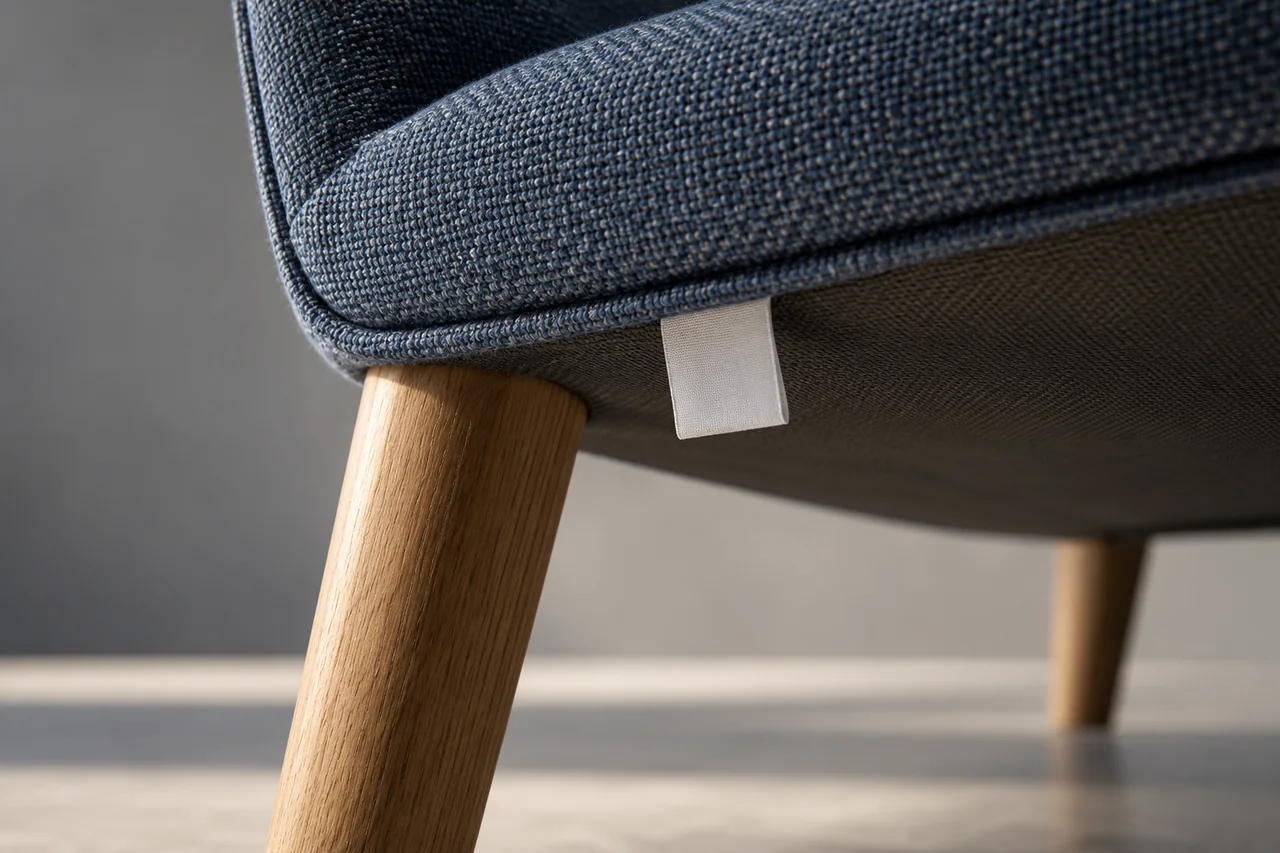
This guide helps facilities teams make the information usable for an assessment. It does not translate every care symbol into a cleaning prescription. The purpose is to prevent a label from one chair being treated as the specification for a different item.
Start with the complete piece of furniture
Give the item or group a recognisable reference, such as the chairs in a particular meeting room. Photograph the whole chair or sofa before taking a label close-up. That connection can be lost when label images are stored separately without their location or item record.
Record the furniture manufacturer and model where visible, then the fabric name or code if known. A furniture model may have been sold with several coverings. Ask the supplier for the actual order specification when the available label does not identify the upholstery.
Separate original specifications from later changes
Recovered seats, replacement cushions and repairs can introduce different materials. Note those changes with the relevant item reference. Two identical-looking reception chairs may no longer have the same care requirements.
Swipe across the table to see all columns →
| Record | Why it helps the assessment |
|---|---|
| Whole-item photograph | Connects the reference to the actual furniture |
| Label photograph | Preserves readable product information |
| Fabric or order reference | Helps locate product-specific instructions |
| Recovering history | Identifies material changes |
| Missing information | Keeps uncertainty visible |
Do not force furniture over or detach parts to obtain a label. Use the site’s safe handling arrangements and ask the supplier when access is difficult. Record what is available rather than risking damage to complete the file.
Locate the relevant care instructions
Use the actual manufacturer’s resources and check that the document covers the identified fabric. Camira’s wool upholstery care guidance illustrates the value of material-specific maintenance information. It is not a universal instruction for every commercial seat.
Keep a dated copy or document reference in the building’s normal records. Ask the surveyor to review it alongside the furniture’s construction and condition. A generic cleaning claim in a supplier brochure is not a substitute for the applicable product information.
What if the label is missing?
Tell the contractor and supply the other records you have. Mark the fabric as unconfirmed rather than assigning it from appearance. The next step may be further information or specialist assessment, and the proposed treatment may need to wait.
Pristine does not hot-water-extract viscose, rayon or art silk. A missing label or a customer’s acceptance of uncertainty does not remove that restriction. Removable covers should not be assumed washable merely because a zip is present.
Use the record in a commercial upholstery enquiry
For a mixed collection, combine these details with the commercial seating inventory. The inventory tells the contractor what exists; the care records help assess suitable treatment for those items.
Send Pristine the London postcode, item counts, photographs and available references through the commercial upholstery service. Request a free site survey to discuss suitability, limitations and access before approving work.
Message Pristine on WhatsApp or send an enquiry. Share the London postcode and the details relevant to this problem. WhatsApp 07488 325796; info@london-carpet-cleaner.co.uk.