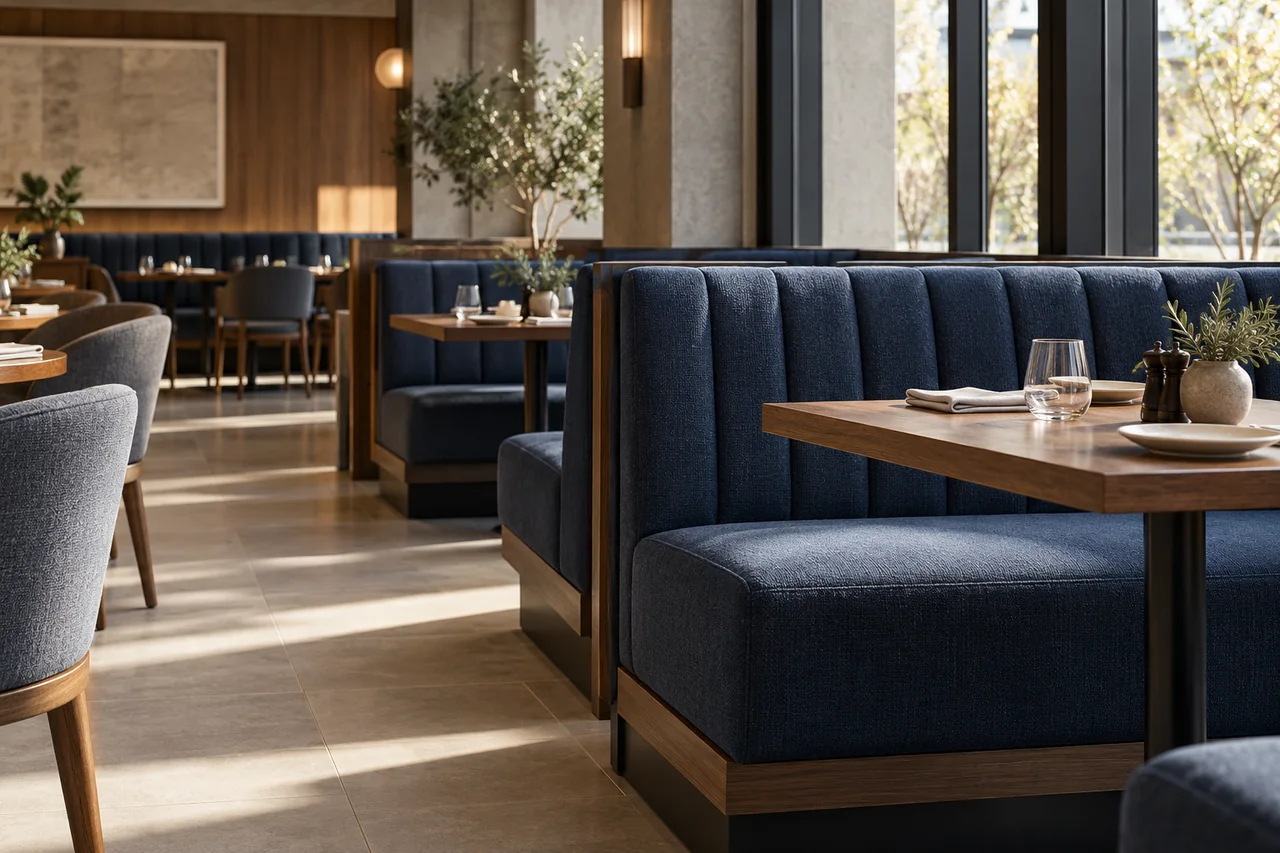
The most useful starting point is the restaurant’s seating plan. It connects the fabric assessment to the tables the manager can actually release. This guide helps restaurant and hospitality teams prepare that plan without assuming every upholstered surface needs the same approach.
What counts as a restaurant upholstery item?
Give movable chairs their item count and identify fixed banquettes by section. Record the surfaces requested, such as seat, back and arms, where applicable. A linear seating description alone may leave uncertainty about the actual fabric area or construction.
Include photographs of complete items and relevant details. Find manufacturer and fabric information where available, especially when repairs or recoverings have introduced different materials into one seating area. Matching colours do not establish matching care instructions.
How can a restaurant release seats for cleaning?
Ask the restaurant manager which seats can be unavailable together. Include their relationship to booked tables, setup and the next service. Agree the cleaning period and the assessed return-to-use arrangements with the contractor before committing the seating to customers.
Swipe across the table to see all columns →
| Seating group | Information for the brief |
|---|---|
| Loose dining chairs | Count, fabric and storage arrangements |
| Fixed banquette | Section reference and requested surfaces |
| Bar fabric stools | Separate count and construction details |
| Private dining room | Actual release and setup times |
| Mixed recovered seating | Product differences and missing records |
This table describes a brief, not a cleaning method. Keep repair, loose fittings and other condition concerns visible so they can be assessed by the appropriate supplier.
Check what happens around service
Restaurant activity can continue while the dining room is closed. Stock arrivals, staff briefings and table setup may use the same route or seating area. Identify those activities and the person who can resolve a conflict before the visit.
For example, a hypothetical restaurant might release a private room while keeping the main banquette available. The contractor needs to know whether the equipment route crosses a working service area and whether the private room is required for setup before guests arrive. Both affect the usable window.
Can every commercial fabric be cleaned the same way?
No. Use product-specific care information and an assessment of the actual upholstery. Pristine does not hot-water-extract viscose, rayon or art silk. A busy service deadline does not remove a material restriction or establish that a different treatment is suitable.
Discuss the fabric, existing marks and limitations through the commercial upholstery service. Do not promise that every mark will disappear or interpret an improved appearance as disinfection or repair.
What should the seating handback record show?
Identify the items actually treated, exceptions and the agreed checks before use. Keep the record tied to the seating plan so the next shift can tell which group it concerns. If part of a banquette was unavailable, state the section rather than marking the whole room complete.
For restaurant upholstery cleaning in London, send Pristine the postcode, seating photographs, counts and proposed service window. Request a free site survey to discuss an assessed scope and a realistic seating handback, subject to availability.
Message Pristine on WhatsApp or send an enquiry. Share the London postcode and the details relevant to this problem. WhatsApp 07488 325796; info@london-carpet-cleaner.co.uk.