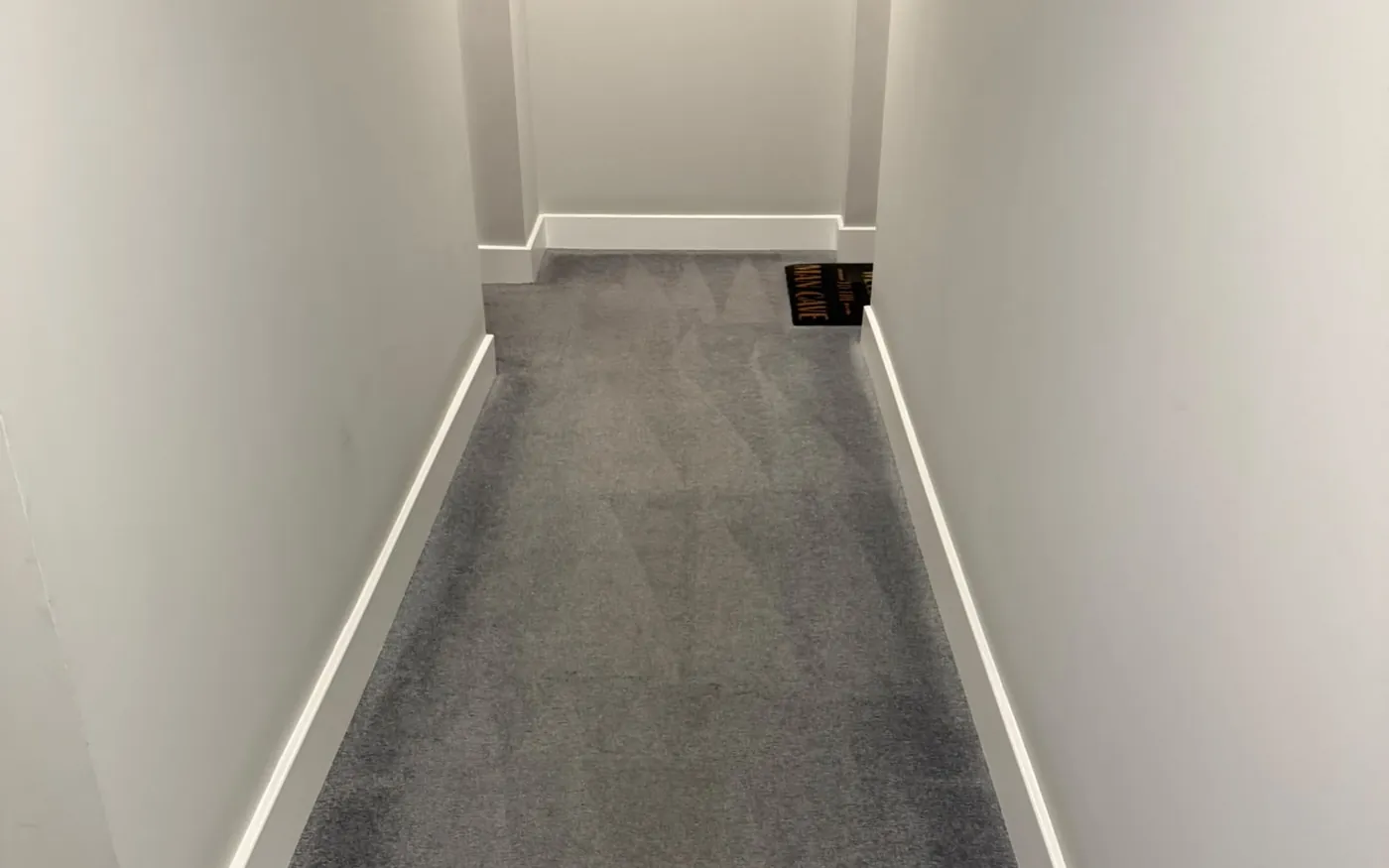
For facilities managers taking over a London office, and building managers inheriting communal areas, this record reduces avoidable guesswork. It explains what has actually been done, what remains uncertain and which information needs recovering. The aim is continuity of care, rather than a large archive that nobody can navigate.
Establish the changeover boundary
Confirm which building, floors and carpeted zones are included in the transfer. An incoming facilities team may manage the tenant’s office while a managing agent retains responsibility for shared entrances and lift lobbies. Do not assume that the same contractor, budget or approval route covers every carpet visible from the reception desk.
Name the people or roles who can clarify the scope. Distinguish the person coordinating access from the person authorising cleaning expenditure. If the outgoing manager is unavailable, record which questions remain unanswered and who will investigate them. A missing answer should stay visible rather than be converted into an assumption at the first booking.
Use a dated transfer record. State when the incoming team took responsibility and which source records were available at that point. This helps later readers understand why a particular decision was made without implying that every historical record was complete or independently verified.
Recover the carpet specification, not just the colour
Look for the manufacturer, product name, fibre and construction information, installation records and current care guidance. A floor plan showing where different products were installed can be more useful than an unlabeled sample. Where a product has been replaced in one room, keep that distinction rather than applying the oldest specification to the whole floor.
Photographs and purchase descriptions can help locate the right record, but they are not substitutes for confirmed material information. If a previous team called the carpet “wool” without supporting documentation, retain that as an unconfirmed description. Ask the appropriate supplier or manufacturer what can be established from the records.
Pristine does not hot-water-extract viscose, rayon or art silk. An old invoice referring to extraction does not override that restriction. Other carpets also require assessment of suitability. The carpet specification article explains what to request before a method is agreed.
Separate routine care from periodic carpet work
Identify who currently vacuums the carpet, reports spills and arranges specialist visits. Those responsibilities may sit with different contractors. A new office cleaning contract should not accidentally leave periodic carpet work unassigned, and a periodic carpet appointment should not be assumed to replace routine care between visits.
Transfer the actual arrangements, including their limits. If a particular room was excluded because it was usually locked, record that. If a scheduled task was proposed but never activated, say so. A timetable in a tender document is not evidence that each task was carried out.
The Carpet and Rug Institute’s commercial maintenance standard links cleaning frequency to the carpet’s use, soiling, routine maintenance and manufacturer requirements. Use those variables to frame the new team’s review. Do not inherit a fixed interval simply because it appears in an old spreadsheet.
Request the previous scope and the record of completed work
A quotation explains proposed work; a completed visit record explains what happened. Keep both where available and distinguish their status. A building archive may contain several quotations, only one of which was accepted. Identify the final agreed scope rather than sending every version to a new contractor without explanation.
Look for the carpeted zones included, accessible areas, exclusions, dates and agreed limitations. If the records mention an area beneath fixed furniture, check whether that area was actually reached. Do not turn a building’s gross floor area into a claim that every square metre was treated.
Preserve relevant condition observations and follow-up questions. A record that says a mark remained after assessment should not disappear when a contractor changes. The new team needs a fair starting point. Equally, an unresolved question is not evidence that the outgoing contractor caused the condition.
Create a simple changeover index
Use a short index to point to the useful records. Keep source files in the building’s approved document system and share only what the incoming team needs for its role. The template below is an organisational suggestion, not a prescribed compliance form.
Swipe across the table to see all columns →
| Record | What to check at transfer |
|---|---|
| Zone plan | Locations are identifiable and product changes are marked |
| Carpet information | Confirmed specification is separated from assumptions |
| Routine care arrangement | Responsible team, actual scope and known gaps |
| Periodic cleaning scope | Agreed version, dates, areas and exclusions |
| Visit and handover records | Completed work distinguished from proposed work |
| Condition history | Dated observations, photographs and unresolved questions |
| Access arrangements | Current responsible contact and review needed |
| Open actions | Named role, next decision and follow-up point |
The index should remain usable when a person leaves. Prefer a stable document reference and responsible role over a private inbox link that the new manager cannot access. Test that the incoming authorised user can open the relevant records before treating the transfer as complete.
Carry unresolved observations forward fairly
List the carpet concerns still requiring assessment. Give the location, date, available photographs and known history. Avoid rewriting the observation in stronger language because the new manager has not seen the original condition. A stain, wear pattern and loose tile are different issues and may need different responses.
Record any immediate building action separately from the future cleaning enquiry. If access to an area has been restricted, identify the responsible site contact and current arrangement. A new cleaning quotation does not by itself resolve flooring defects or establish that an area is ready for unrestricted use.
Where the evidence is incomplete, arrange an observation of the current condition before making comparisons. The new team can establish a dated starting record without claiming that the earlier state was better or worse. This is particularly useful when old photographs have no clear location or capture date.
Reconfirm building access with the current team
Contractor entry arrangements can change even when the building and carpet stay the same. Confirm who manages attendance, which entrance is used and whether lift or loading arrangements need booking. Avoid forwarding old access instructions as if they remain current. The incoming building team should verify the practical requirements.
Share sensitive access information only through the approved channel with the people who need it. A carpet record can state that an escort is required without carrying security codes into a widely circulated document pack. Remove unnecessary personal data from copies intended only to support a cleaning assessment.
Check the availability of the carpeted zones as well as entry to the building. A previously empty floor may now be occupied; a reception route may have changed. The access window needs to reflect the current operation. The district name, whether the City or Canary Wharf, does not determine the building’s actual rules.
Ask the incoming supplier to assess the current position
Give a prospective contractor the useful index and identify the unknowns before the survey. Ask what further specification or condition information is needed. Present previous methods as history, rather than an instruction to repeat them. The contractor should assess the actual carpet, condition and proposed scope.
If a maintenance programme is being considered, ask for the proposed visit scopes and review arrangements to be explained. Keep routine care responsibilities distinct. A changeover is a useful opportunity to clarify gaps, but it does not prove that more frequent specialist cleaning is automatically required in every zone.
Use the commercial carpet maintenance page to frame that discussion. Where a one-off clean is more appropriate to the current requirement, record that decision and any later review point. The plan should serve the building’s needs rather than preserve an inherited label.
Close the transfer with a short list of open decisions
Finish with the questions that still need an owner. Typical examples include locating a missing specification, checking a replaced carpet zone, confirming access or arranging assessment of an unresolved mark. State what is known, what is missing and who is expected to act. Do not mark a transfer complete merely because a folder has been copied.
Keep the incoming team’s new decisions separate from historical records. If a scope changes after the first survey, retain the basis of that change and the agreed current version. This makes the record useful at the next handover without creating several competing documents that all appear current.
Questions incoming managers ask
Should we repeat the previous cleaning method? Treat it as recorded history and ask the incoming contractor to assess suitability. Current carpet information, condition and manufacturer guidance matter more than an unexplained method label on an old invoice.
What if no cleaning records exist? Start with an honest list of missing information, identify the carpeted zones and arrange a current assessment. Do not invent a history. Build a dated record from what can now be verified.
Is this the same as a cleaning-visit handover? No. A visit handover records a specific piece of work. A management or contractor changeover transfers ongoing responsibilities and information across several visits. Link the relevant visit records into the wider index.
Plan the next step for your London building
Pristine assesses commercial carpet cleaning and maintenance enquiries for London offices and managed communal areas, subject to survey and availability. Bring the available records and identify the gaps so the survey can focus on the current building and a useful written scope.
Request a commercial carpet survey, or message Pristine on WhatsApp. Email info@london-carpet-cleaner.co.uk. WhatsApp: 07488 325796. Customer response hours are 09:00–16:00 Monday–Friday, Europe/London; cleaning appointments are agreed separately.