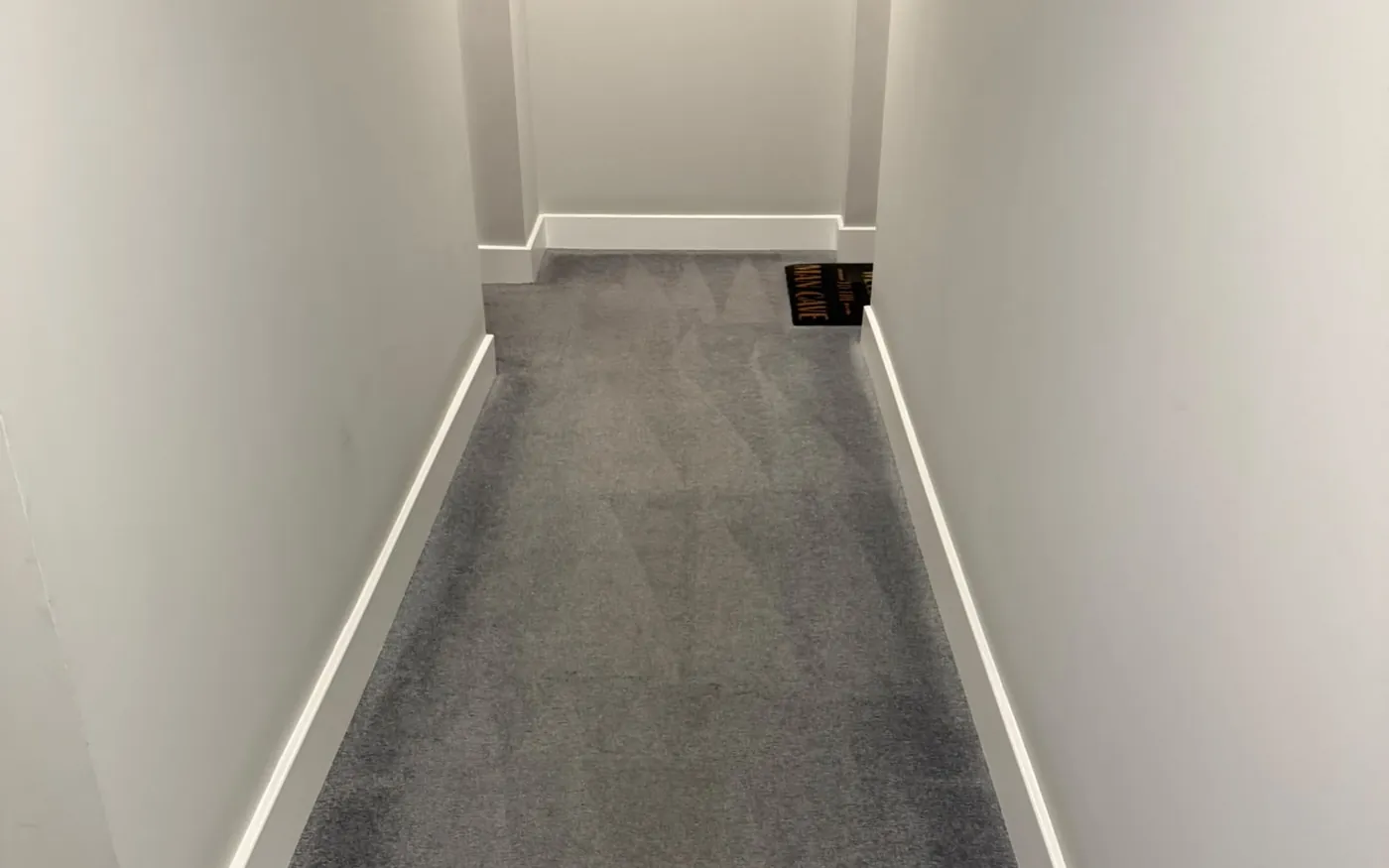
For a London facilities manager, the useful starting point is the actual building rather than a standard winter calendar. A main entrance, a staff entrance from a courtyard and a delivery route may feed different carpeted areas. Changes to visitor numbers, temporary entrances or building works can alter those routes. A plan carried over from the previous year may miss the doorway people now use most.
This article is a seasonal coordination tool. It is not a product specification for entrance matting, an emergency drying plan or a promise of a particular cleaning result. Its purpose is to help the building team assemble a focused brief and identify which decisions belong with which person.
Follow the route from outside to the carpet
Walk the route with the responsible building contact and identify the relevant transitions. Start at the entrances people actually use, then mark the matting and the carpeted circulation beyond it. Include any alternative route used by staff, deliveries or contractors if it affects the proposed carpet scope.
Give each transition a simple reference. “Reception carpet beside the east entrance” is more useful than “front of house” when several doors are involved. Mark the same references on a sketch or floor plan so that the reception team, routine cleaner and surveyor can discuss the same locations.
Keep other floor finishes distinct. If people cross a stone lobby before reaching a carpeted lift area, record that context without adding specialist stone treatment to a carpet enquiry. An assessment of the carpet should not silently become an instruction covering every floor finish along the route.
Record what you see and what you do not know. A darker area may be soil, moisture, wear or another issue requiring assessment. A location note and dated photograph are useful starting points; they are not a diagnosis. Follow the building’s procedures if a condition presents an immediate concern rather than waiting for a routine carpet appointment.
Check how the entrance arrangement is being managed
Ask who is responsible for the existing matting and its routine checks. Some buildings have a separate mat supplier or a managed exchange arrangement. Others use installed systems with specific care requirements. The office cleaning contractor may have a defined task within that arrangement without owning the whole system.
Request the relevant instructions from the responsible supplier or manufacturer where available. Do not choose mat sizes, fixings or products from a carpet-cleaning article. The appropriate arrangement depends on the entrance, installation and building requirements and may need a specialist assessment.
Identify any temporary changes. A mat that has been moved during a reception event, an entrance kept open during works or stored material obstructing the intended route can change what happens beyond the doorway. Record who will resolve the arrangement rather than treating it as another stain to remove.
The Carpet and Rug Institute’s commercial maintenance standard includes soil prevention and routine care within a wider programme. It supports considering how material reaches the carpet, alongside the carpet manufacturer’s guidance. It does not establish a universal matting design or a winter visit frequency for a particular London building.
Separate a changing condition from the cleaning calendar
A schedule tells people when planned work is expected. It does not tell them what to do if the entrance conditions change between visits. Give the local team a route for reporting concerns to the person responsible for the area.
For example, the building may need to distinguish ordinary tracked soil from a suspected leak or another source of moisture. The person recording the observation should avoid diagnosing the cause or authorising an unassessed treatment. Share the location and available information with the responsible contact, who can arrange the appropriate response.
Keep the carpet contractor informed about known incidents and previous treatments before a survey. A proposed routine clean may need reassessment if the condition has changed materially. Do not assume that specialist contamination, building defects or water-damage work are included in a standard carpet-cleaning quotation.
Use the building’s existing safety arrangements for any immediate issue. The Health and Safety Executive’s cleaning guidance highlights both contamination and hazards that cleaning activity can introduce. The relevant building team should coordinate the actual controls and access arrangements; a carpet maintenance table does not replace that assessment.
Give the seasonal plan its own short action sheet
Use a small table to connect the entrance route with a person and a next decision. The example below is a blank working format, not a record from a customer site or a safety checklist certified for every building.
Swipe across the table to see all columns →
| Entrance reference | Carpeted area affected | Existing care arrangement | Decision owner | Change to report |
|---|---|---|---|---|
| Main or secondary door reference | Named lobby or circulation zone | Confirm current routine scope | Building role to confirm | Different route, new marking or changed use |
| Staff or delivery entrance | Named carpeted route | Confirm matting and cleaning contacts | Building role to confirm | Temporary works or access change |
| Alternative entrance during works | Proposed temporary carpet route | Arrangement awaiting confirmation | Project or building contact | Whether the temporary plan remains current |
Add the date and the next action where a decision is outstanding. Avoid a row that simply says “monitor” without explaining who will look at it, what they are reporting or where the report goes.
Keep the action sheet short enough for the people using it. Detailed product information can sit in the building record. The sheet should help the team find that information and contact the right person rather than reproduce every document in the reception folder.
Connect routine care to specialist assessment
Confirm what the routine cleaner is already instructed to do in the entrance and surrounding carpeted zones. Ask for the actual scope and relevant product instructions. Do not add an unspecified treatment because the area looks different after a busy week.
If specialist carpet cleaning is being considered, share the entrance references, the existing routine care and any available carpet specification. Explain the desired outcome and the constraints. The surveyor can then assess the proposed work with the surrounding entrance arrangement in view.
A periodic cleaning visit and a review of entrance soil control may be related, but they are not the same task. Cleaning can address an agreed carpet scope; another supplier or building decision may be needed for a matting or access issue. A clear brief lets those decisions remain connected without making one contractor responsible for work it has not accepted.
For the carpet itself, the commercial maintenance page explains how a programme is assessed. The seasonal action sheet adds the changing entrance context. It should not override manufacturer guidance or prescribe extra visits without a reason tied to the actual building.
Keep temporary traffic visible
Winter planning can be disrupted by an office event, fit-out, delivery programme or temporary reception arrangement. Ask the building coordinator to identify activities that change traffic through the entrance. The carpeted route may need a different assessment once those activities are understood.
Record when a temporary arrangement starts and who confirms that it has ended. A temporary route can become an unofficial permanent route if nobody closes the decision. The next programme review should use the route people are actually taking, not the route shown in an old plan.
If contractors or deliveries pass through a tenant area, confirm the boundary with the appropriate contact. A building-wide seasonal plan does not automatically authorise cleaning inside an occupier’s suite. Use the existing multi-tenant office scope article to clarify those proposed work areas.
Where refurbishment affects the entrance, agree the carpet stage with the project coordinator. The office refurbishment article covers continuing trades, protection and readiness. Your seasonal plan can point to the confirmed arrangement rather than repeat a separate project programme.
Review the plan using comparable observations
At the agreed review point, compare the same entrance references. Note changes in traffic, temporary arrangements and routine care alongside any photographs. A change in appearance without that context can lead to the wrong conclusion about what needs to happen next.
Use the carpet condition log for continuing carpet observations. Keep the seasonal sheet focused on entrances, responsibilities and changing routes. The log records condition; the seasonal plan records the entrance decisions that may affect the next assessment.
If a mark remains after treatment, record it honestly and seek the appropriate review. Do not promise that another general clean will resolve a cause that has not been identified. Equally, do not label all darker traffic areas as permanent damage without assessment.
At the end of the seasonal review, retain the decisions that matter for the next programme: which entrances were involved, which arrangements changed, what information remains missing and who owns the next action. This is more useful than an unsupported claim that a particular visit prevented a measurable amount of damage.
Questions London building managers ask
Should office entrance carpet be cleaned more often in winter?
That depends on the carpet, actual use, observed condition, existing care and manufacturer guidance. Give those details to the surveyor. A season alone is not enough to set a suitable programme or a fixed frequency.
Does carpet cleaning include replacing or redesigning entrance matting?
Do not assume it does. Identify who manages the matting and what assessment is needed. Keep any carpet-cleaning instruction and any matting supplier’s work clearly described and separately agreed.
What if an entrance carpet seems unusually wet?
Follow the building’s procedures and inform the responsible contact so the cause and appropriate response can be assessed. Do not treat a suspected leak, contamination or water-damage situation as a routine cleaning instruction.
Can the same method be used in every entrance lobby?
The carpet products and conditions need assessment. Pristine does not hot-water-extract viscose, rayon or art-silk materials. A shared building address or seasonal deadline does not establish material suitability.
Discuss the entrance carpet in your London building
Pristine Carpet Solutions assesses commercial carpet cleaning for London offices and agreed communal areas, subject to survey and availability. Share the entrances and carpeted zones you want assessed, the current care arrangement and any known changes in use. We can discuss the carpet scope alongside the information held by your building team.
Discuss your office entrance-carpet plan, 07488 325796, or email info@london-carpet-cleaner.co.uk. Customer response hours are 09:00–16:00 Monday–Friday, London time. Survey and cleaning visits are agreed separately.