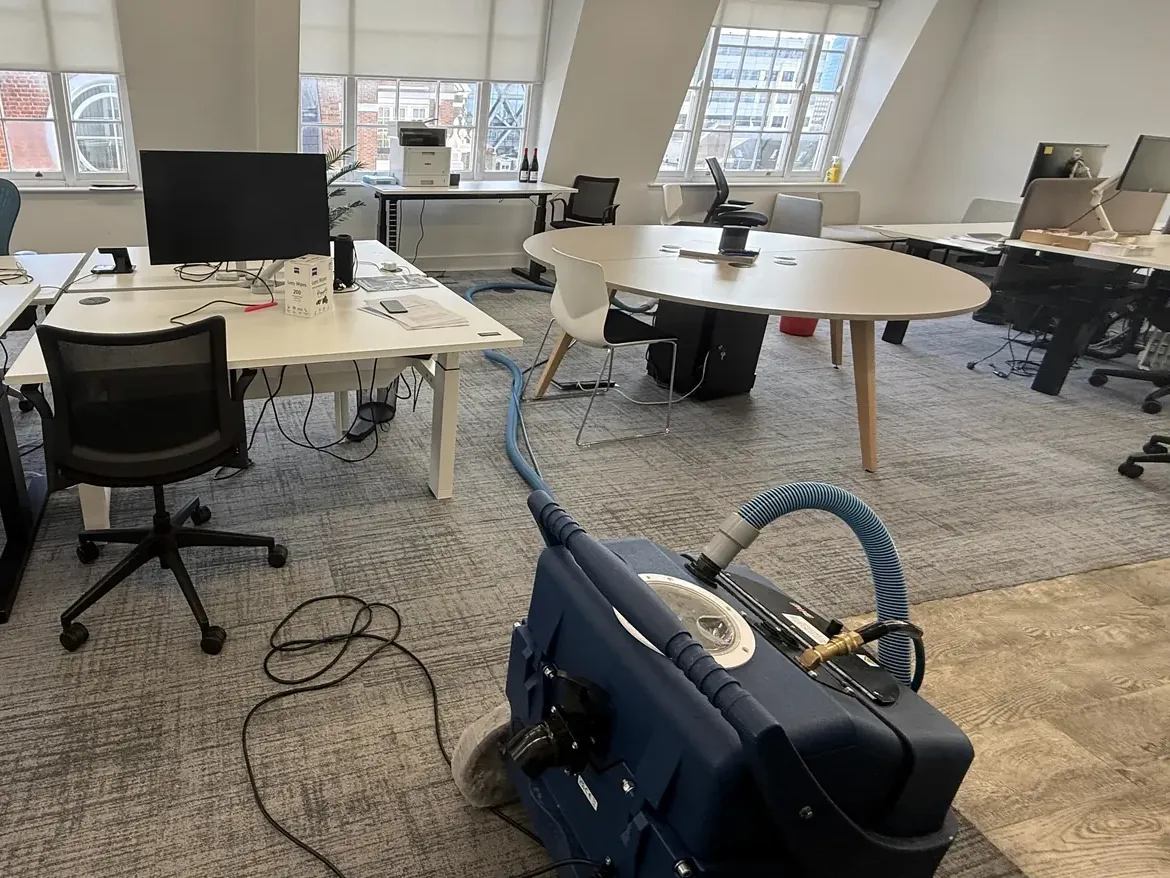
A facilities manager may see a lightly booked desk area and a heavily booked meeting suite on the same day. A building manager may also need to account for shared reception, lifts and occupiers outside the immediate office team. The useful planning unit is the area people will actually need, including the route to it.
This article provides a suggested occupancy and zone-release sheet. It is different from choosing an after-hours appointment or deciding who moves furniture. Its purpose is to connect changing bookings with a practical decision about which carpeted areas can be made available. It does not prescribe a safe access arrangement or guarantee an occupied-site service.
Use actual bookings as a starting point
Ask the office team how use of the proposed area is confirmed. A regular work-from-home day may be useful background, but an internal event, visiting team or training session can change it. Take a dated view of the relevant information and identify the person who will confirm it nearer the proposed visit.
Record use at zone level. “Third floor quiet” may hide a meeting room booked all afternoon and a route used by people from another department. Separate the carpeted desk area, rooms and circulation that matter to the scope rather than relying on a single floor-wide occupancy label.
You do not need to send the contractor a list of employees or the contents of their calendars. A summary of the areas required, relevant times and responsible contacts is normally a more focused starting brief. Use the organisation’s approved process for any information sharing and avoid exposing unnecessary personal or meeting details.
Keep unknowns visible. A room marked “available subject to visitor schedule” is not yet released for cleaning. Identify what will settle that uncertainty and who is responsible for confirming it, rather than treating the absence of a booking as permission.
Check routes as well as destinations
An unoccupied desk neighbourhood can still sit on the route to an occupied meeting suite, tea point or exit. Walk the proposed area with the responsible building contact and contractor. Discuss the people who may need to pass through, including visitors and other service teams.
Ask the relevant site team to assess the arrangements for that use. Do not invent a diversion from the desk-booking plan or assume a warning sign creates an acceptable route. The actual controls belong in the site’s agreed assessment and the contractor’s working arrangements.
The HSE’s cleaning guidance discusses hazards that cleaning can introduce and the importance of choosing methods and access arrangements appropriately. That general guidance supports assessing the actual setting. It does not establish that a particular carpeted office zone is safe to occupy during or immediately after treatment.
Where the proposed work affects common circulation or another occupier, bring in the building manager before the schedule is final. The multi-tenant scope article explains who can authorise areas across those boundaries. An internal desk booking cannot authorise work beyond the office team’s control.
Separate an available room from a released area
Availability is a calendar observation. Release is a practical confirmation that the agreed area can be handed over under the required arrangements. A meeting room without a booking might still contain equipment awaiting collection or be needed as a fallback space for a visiting team.
Give the release decision to an appropriate role. It should be someone who can confirm the actual use and resolve a conflict, rather than whichever employee happens to be present when the contractor arrives. Record how that person will communicate with the contractor or coordinating facilities contact.
Keep furniture preparation as a linked task. A zone may be unoccupied but not ready under the agreed furniture arrangement. Refer to the furniture responsibilities article rather than assuming the cleaning team will clear desks, move technology or deal with personal belongings.
The release should describe the agreed carpeted area and any exclusions. If a room is withheld, record that explicitly. Do not quietly move the same amount of work into another unassessed space merely to preserve a notional floor total.
Build a zone-release sheet
Use a short sheet that can be reviewed with the office coordinator, building contact and contractor. The example below is a suggested blank format, not a customer record or a universal permit-to-work system. Your building’s existing procedures may require additional information or a different approval process.
Swipe across the table to see all columns →
| Zone reference | Confirmed use | Shared-route dependency | Release decision | Return-to-use dependency |
|---|---|---|---|---|
| Desk neighbourhood | Relevant occupancy window | Route to another used space | Named role to confirm | Agreed assessment and handback |
| Meeting suite | Meetings and visitor needs | Reception and approach route | Room coordinator to confirm | Next confirmed use and release check |
| Support area | Deliveries or other service activity | Shared circulation | Responsible facilities contact | Agreed sequence and completion record |
| Deferred zone | Use not yet resolved | Dependency to investigate | Not released | Revised proposal required |
Use your own zone references instead of these generic labels. The contractor should be able to match the sheet to the survey and written scope. If the floor plan changes, update the sheet so it describes the current layout rather than an old arrangement of desk banks.
Add a date and an owner for unresolved decisions. Avoid a status such as “probably free” without explaining when it will be checked. The aim is to give the next person enough information to act, not create a confidence score that hides the uncertainty.
Agree how booking changes will be handled
Hybrid-office schedules can change after a cleaning date is proposed. Decide which role will collect changes and how the contractor will be informed. A single coordinated update is more useful than separate room users giving incompatible instructions to the cleaning team.
Record a point at which the proposed work arrangement needs to be reconfirmed. The timing should be agreed with the contractor and building team, not imposed by this article. It needs to leave room for meaningful assessment where a new meeting or visitor requirement changes the available area.
If a booking conflict arises, identify the affected zone and the decision required. The contractor may need to reassess the sequence, scope or visit. Do not promise that a different method will automatically fit the shorter window or that the same price and availability will remain unchanged.
Communicate the agreed result to the people who need it through the office’s normal channels. Changing a room booking without updating the facilities plan can leave the contractor working from the earlier version. Keep one current instruction, with a clear record of any agreed revision.
Keep carpet suitability independent of the calendar
A short period without occupants does not determine the cleaning method. Provide the carpet information, condition and available access so the contractor can assess the proposal. If the method and work needed do not fit the window, the planning decision must change rather than the material restrictions being ignored.
Pristine does not hot-water-extract viscose, rayon or art-silk materials. Neither a late cancellation in the meeting calendar nor an urgent visitor deadline removes that restriction. Different carpet products within the same office may need separate consideration.
The method comparison guide explains the different jobs that methods can perform. Use it to frame the discussion, while keeping the actual choice dependent on the survey. A low-moisture label is not evidence that an area can be handed back at any requested time.
Likewise, avoid turning an occupancy forecast into a fixed drying promise. The drying and reopening guide sets out the variables and need for agreed checks. The zone-release sheet should reference those agreed arrangements without creating another contradictory timetable.
Test the proposed sequence against a realistic day
Consider a hypothetical London office with a quiet west desk area, a booked east meeting suite and a shared route through reception. The desk-booking dashboard suggests that most people will be elsewhere, but the meeting attendees still need to reach their rooms. That shared movement must be considered before treating the west area as independently available.
The office coordinator might be able to move a meeting, or the building team might identify a different arrangement for assessment. The contractor must then confirm whether the revised scope and sequence are workable. This example demonstrates a planning question, not an instruction to divert people through any particular route.
Ask what happens if the expected arrangement changes on arrival. Identify who can make a decision and which work remains withheld until it is resolved. A plan that only works when every booking stays unchanged needs an explicit way to handle a variation.
Also consider departure and the next occupied period. A cleaning team finishing one zone does not itself release that zone to staff. Use the agreed checks and handback process, and make sure the receiving contact understands which areas remain restricted or unfinished.
Review completed and deferred work separately
At the end of the visit, reconcile the approved areas with what was actually completed. An area withheld because a meeting overran should appear as an exception, not disappear into a general description such as “office clean completed”. Ask for the appropriate completion record and an agreed next step where work remains outstanding.
Use that evidence to improve the next booking rather than assigning an unsupported performance score. Perhaps a certain room needs a different coordination contact, or the booking summary was checked too early. Record the practical lesson and update the next brief.
Keep routine office cleaning instructions connected but separate. A postponed periodic carpet zone does not automatically become an extra task for the routine cleaner. The routine and periodic responsibilities article explains how to keep those task boundaries clear.
Questions facilities and building managers ask
Is Friday automatically the best day for a hybrid-office carpet clean?
No. Use actual room bookings, routes and the assessed work window. A quiet desk day can still include meetings, visitors and other contractors. The suitable arrangement depends on the building and the proposed carpet work.
Can staff keep using desks beside the cleaning area?
That needs assessment for the actual site, method and controls. Do not infer permission from a map or a low booking count. Ask the responsible building contact and contractor to confirm what is workable before communicating instructions.
Does an empty booking calendar authorise the work?
No. Confirm release with the person authorised to make the area available and approve the scope. The calendar supplies information about expected use; it does not replace approval or readiness checks.
Plan a carpet survey for your hybrid London office
Pristine Carpet Solutions assesses commercial carpet cleaning for London offices and agreed managed communal areas, subject to survey and availability. Share the carpeted zones, relevant occupancy windows and unresolved room or route dependencies. The survey can establish what is appropriate before the written scope and cleaning arrangements are agreed.
Discuss carpet cleaning around your office occupancy, 07488 325796, or email info@london-carpet-cleaner.co.uk. Customer response hours are 09:00–16:00 Monday–Friday, London time. Survey and cleaning visits are agreed separately.